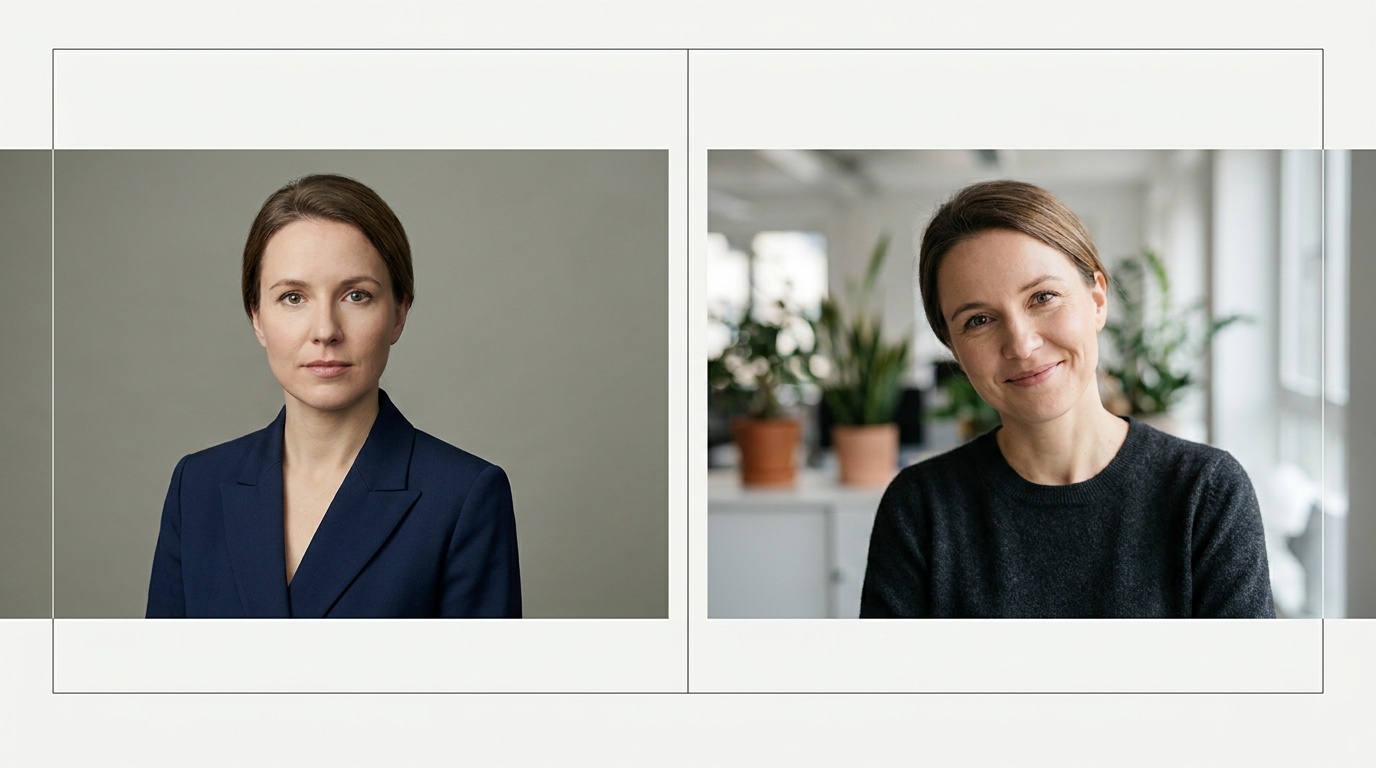
Should You Put a Photo on Your Resume? A 2024 Guide
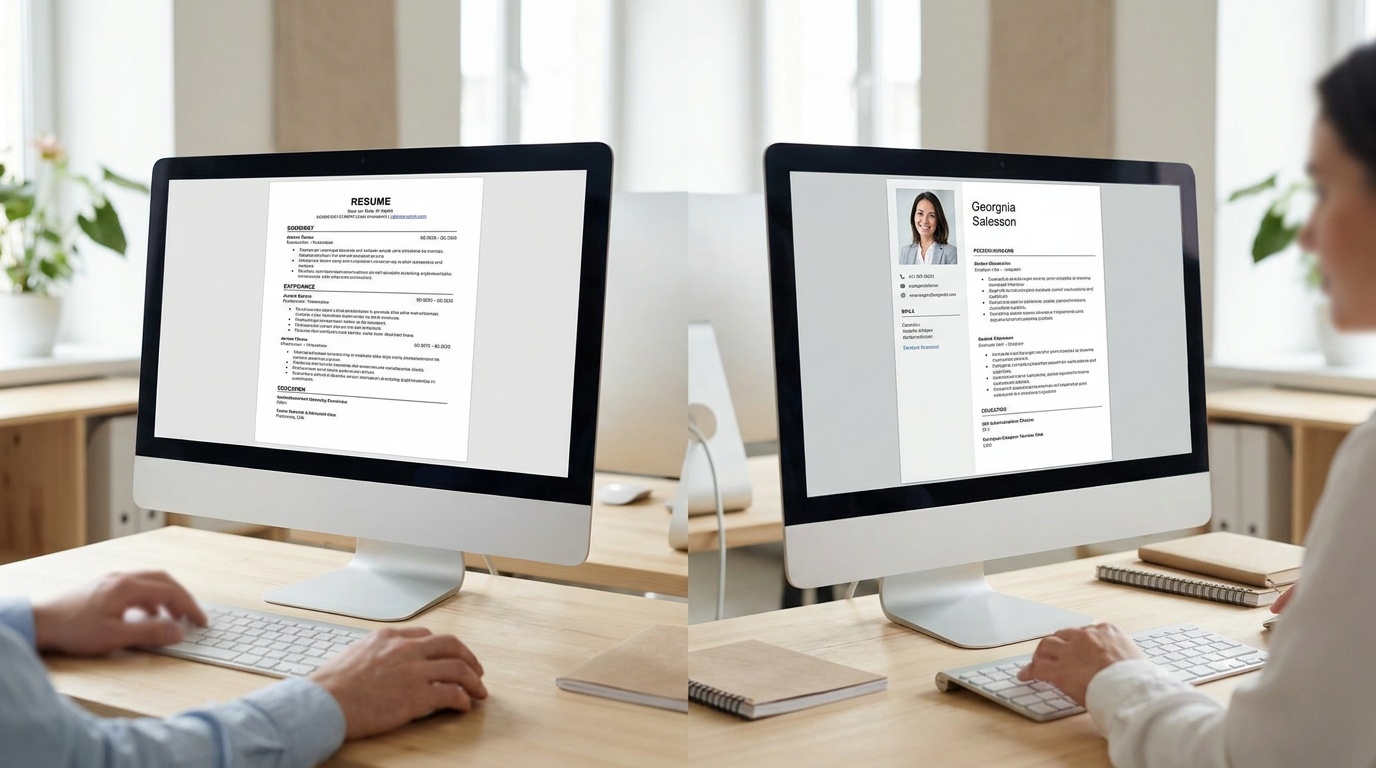
The question of does a photo on a resume help or hurt is one of the most common debates among job seekers, and for good reason. Including a picture can feel like a great way to personalize your application, but it can also be an immediate deal-breaker depending on where you're applying. The answer isn't a simple yes or no; it's a matter of geography, industry, and professional standards.
The Great Divide: US/UK vs. Mainland Europe
Before you even think about what kind of photo to use, you need to know the local customs. The world is sharply divided on this topic, and getting it wrong can get your resume tossed before it’s even read.
The Rule in the US, UK, Canada & Australia: No Photo
In English-speaking countries like the United States, the United Kingdom, Canada, and Australia, the standard professional advice is firm: do not put a photo on your resume.
This isn't about aesthetics; it's about anti-discrimination law. In the US, Title VII of the Civil Rights Act of 1964 prohibits employment discrimination based on race, color, religion, sex, and national origin. The UK's Equality Act 2010 offers similar protections. By including a photo, you open the door for unconscious bias (or conscious discrimination) related to your age, race, gender, and perceived attractiveness. Recruiters and HR professionals are trained to avoid this liability, so they often prefer—and sometimes are required to use—resumes without photos.
Furthermore, many large companies use Applicant Tracking Systems (ATS) to screen resumes. These software programs parse your resume for keywords and qualifications. An image can confuse the software, causing formatting errors or leading to your resume being rejected outright. It’s a technical risk that simply isn’t worth taking.
The Rule in Germany, France & Mainland Europe: Photo Expected
Cross over to mainland Europe, and the expectations flip entirely. In countries like Germany, Austria, Switzerland, France, Spain, and Belgium, a professional photo on your CV (Curriculum Vitae) is not just accepted, it's often expected.
In these cultures, a photo is seen as a standard part of a complete application. It helps build a personal connection and is considered a sign of a confident, transparent applicant. In Germany, the Bewerbungsfoto (application photo) is a long-standing tradition. Submitting a CV without one can make your application seem incomplete or suggest you have something to hide. It's an integral part of presenting yourself as a professional.
When Does a Photo on a Resume Help or Hurt Your Chances?
Understanding the regional differences is the first step. But even within countries where photos are acceptable, the choice depends on your industry and the specific role you're targeting.
A resume photo generally hurts your application if:
- You're applying in the US, UK, Canada, or Australia. The risk of bias and ATS rejection is too high.
- The photo is unprofessional. A selfie, a cropped picture from a wedding, or a blurry, poorly lit shot does more harm than good, no matter the location. It signals a lack of judgment and professionalism.
- You're in a conservative industry. For fields like law, finance, government, and academia, the focus should be 100% on your qualifications. Even in Europe, a photo might be seen as less important than your credentials in these sectors.
A resume photo can help your application if:
- You're applying in mainland Europe. It meets cultural expectations and completes your professional presentation.
- You're in a client-facing role. For jobs in sales, real estate, consulting, or hospitality, a warm and professional photo can help establish trust and approachability.
- You're in a creative or public-facing industry. For actors, models, brand ambassadors, journalists, and some marketing roles, your face is part of your brand. In these cases, a headshot isn't just helpful; it's often required.
- You're building a personal brand. While it shouldn't be on your US/UK resume, a professional photo is essential for your LinkedIn profile, personal website, and speaker bios.
The Anatomy of a Perfect Resume Photo
If you've determined that you need a photo for your CV, it must be impeccable. As a portrait photographer, I can tell you that a great headshot is a careful balance of technical skill and authentic expression. Anything less than professional will undermine your credibility. Here’s a checklist for getting it right.
### Head-and-Shoulders Is King
Your resume photo should be a classic headshot. This means it's cropped from the top of your shoulders to just above your head. Avoid full-body shots or photos cropped too tightly on your face. The focus should be on you, not your location or outfit.
### Background: Keep It Simple and Neutral
A busy background is the number one distraction in a headshot. It pulls the viewer's eye away from your face. Find a solid, neutral background like a plain white, grey, or light-colored wall. Avoid patterns, clutter, or outdoor scenery. A photo taken in your living room with a bookshelf behind you looks amateurish.
### Lighting: Your Most Important Tool
Good lighting is what separates a professional portrait from a snapshot. You don't need a studio to achieve it.
- Use Natural Light: The best and most flattering light is soft, indirect daylight. Position yourself facing a large window, with the light falling evenly on your face.
- Avoid Harsh Sun: Direct sunlight creates hard, unflattering shadows and will make you squint. If you're outside, find a spot in open shade, like under the overhang of a building.
- Watch Out for Bad Angles: Never use direct overhead lighting (like a ceiling fixture), as it creates dark shadows under your eyes, known as "raccoon eyes." Similarly, being backlit (with the window behind you) will turn you into a dark silhouette.
### What to Wear: Dress for the Job You Want
Your clothing should align with the industry you're targeting. When in doubt, it’s always better to be slightly overdressed than underdressed.
- Colors and Patterns: Stick to solid colors. Jewel tones like navy blue, burgundy, and forest green look great on almost everyone. Avoid busy patterns, stripes, and large logos, as they are distracting on camera.
- Style: A blazer, a button-down shirt, or a simple blouse are safe and professional choices. Avoid t-shirts, hoodies, and anything with spaghetti straps or a plunging neckline.
- Accessories: Keep jewelry and makeup minimal and classic. The goal is to look polished, not to make a fashion statement.
### Expression and Pose: Confident and Approachable
Your expression is your chance to connect with the recruiter. You want to look confident, trustworthy, and friendly.
- The Smile: A forced, toothy grin can look unnatural. Aim for a genuine, gentle smile. You can even practice in a mirror to see what feels most natural. A slight smile with your mouth closed is often a great option.
- The Pose: Don't face the camera straight-on like you're taking a passport photo. Angle your body about 45 degrees away from the camera, then turn your head back to face the lens. This creates a more dynamic and flattering posture.
- The Eyes: Your eyes should convey confidence. A great photographer's trick is to think about something that makes you happy or confident right before the picture is taken. It will show in your expression.
Upload a photo, pick a look and get your portrait in a minute. Your face stays yours.
Try itCommon Resume Photo Mistakes (and How to Avoid Them)
Even with the best intentions, it's easy to make a mistake that undermines your professionalism. Here are the most common errors I see.
- The Awkward Selfie: An arm's-length selfie is always obvious. The angle is usually too high or too low, and the lens distortion is unflattering. If you're taking the photo yourself, use a tripod or prop your phone up and use the self-timer.
- The Group Photo Crop-Out: Never crop yourself out of a group photo. The resolution is almost always poor, the lighting is out of your control, and you might have someone's stray shoulder or arm in the frame. It looks lazy and unprofessional.
- The Outdated Photo: Using a photo from five or ten years ago is misleading. The recruiter who meets you for an interview should recognize you from your picture. Use a photo that is no more than two years old.
- The Low-Quality Image: A blurry, pixelated, or poorly lit photo is an instant red flag. It suggests a lack of attention to detail. Make sure your final image is sharp, clear, and high-resolution.
- The Over-Edited Filter: Avoid Instagram filters, heavy skin smoothing, or any editing that makes you look unnatural. A light touch-up to correct color or brightness is fine, but your photo should look like you on your best day, not like a cartoon version of yourself.
How to Get a Professional Headshot Without a Photographer
Hiring a professional photographer is the gold standard, but it's not always feasible. You can still get a high-quality result on your own with a little planning.
First, follow all the steps in the checklist above: find a neutral background, use soft window light, dress professionally, and use your phone's self-timer. Ask a friend for help if you can—it's much easier for someone else to frame the shot while you focus on your expression.
However, getting all these elements right—the lighting, the professional attire, the perfect background—can be challenging. For those who want a guaranteed studio-quality result without the time or expense of a photo shoot, AI-powered tools offer a fantastic modern alternative. A service like Portretto can transform a simple, well-lit selfie from your phone into a range of professional business headshots. It ensures perfect lighting, a clean studio background, and even professional clothing, all while preserving your unique facial features so you look authentic and polished.
The Final Verdict
So, does a photo on a resume help or hurt? The definitive answer is: it depends entirely on where you are. In the US and UK, a photo actively hurts your chances by introducing bias and creating technical problems with ATS scanners. In mainland Europe, a professional photo helps by fulfilling cultural expectations and presenting a complete application.
Your resume's job is to get you an interview. Every element on it should support that goal. Always prioritize your skills, experience, and accomplishments. When in doubt, especially in an international context, the safest bet is to leave the photo off the resume itself and save your professional headshot for your LinkedIn profile, where it is not only welcome but expected.
FAQ
Should I put a photo on my LinkedIn profile?
Yes, absolutely. A LinkedIn profile without a photo is often viewed as incomplete or inactive. A professional, high-quality headshot is expected and helps build trust and recognition with recruiters and professional connections.
What is the best size for a resume photo?
If you are including a photo on a CV for Europe, it should be small and unobtrusive. A standard passport-size photo, roughly 2 x 2 inches (or 5 x 5 cm), is a good guideline. It should fit neatly in the header or contact information section without dominating the page.
Can an Applicant Tracking System (ATS) read a resume with a photo?
Often, no. Many Applicant Tracking Systems are designed to parse text only and cannot process images. Including a photo can cause formatting errors, making your resume unreadable to the software and leading to its rejection before a human ever sees it.
Can a company in the US legally require a photo on a resume?
For most jobs, no. Requesting a photo before an interview can expose a company to discrimination claims. The only major exception is for roles where appearance is a Bona Fide Occupational Qualification (BFOQ), such as for actors or models.
Is it okay to use a casual photo for a creative job application?
Even for creative roles, your photo should be professional. While you might have more leeway with expression or a slightly more relaxed wardrobe, it should still be a high-quality headshot. Avoid party snapshots or blurry selfies; your photo should reflect your personal brand, not your personal life.