Should I Wear Glasses for My Professional Headshot?
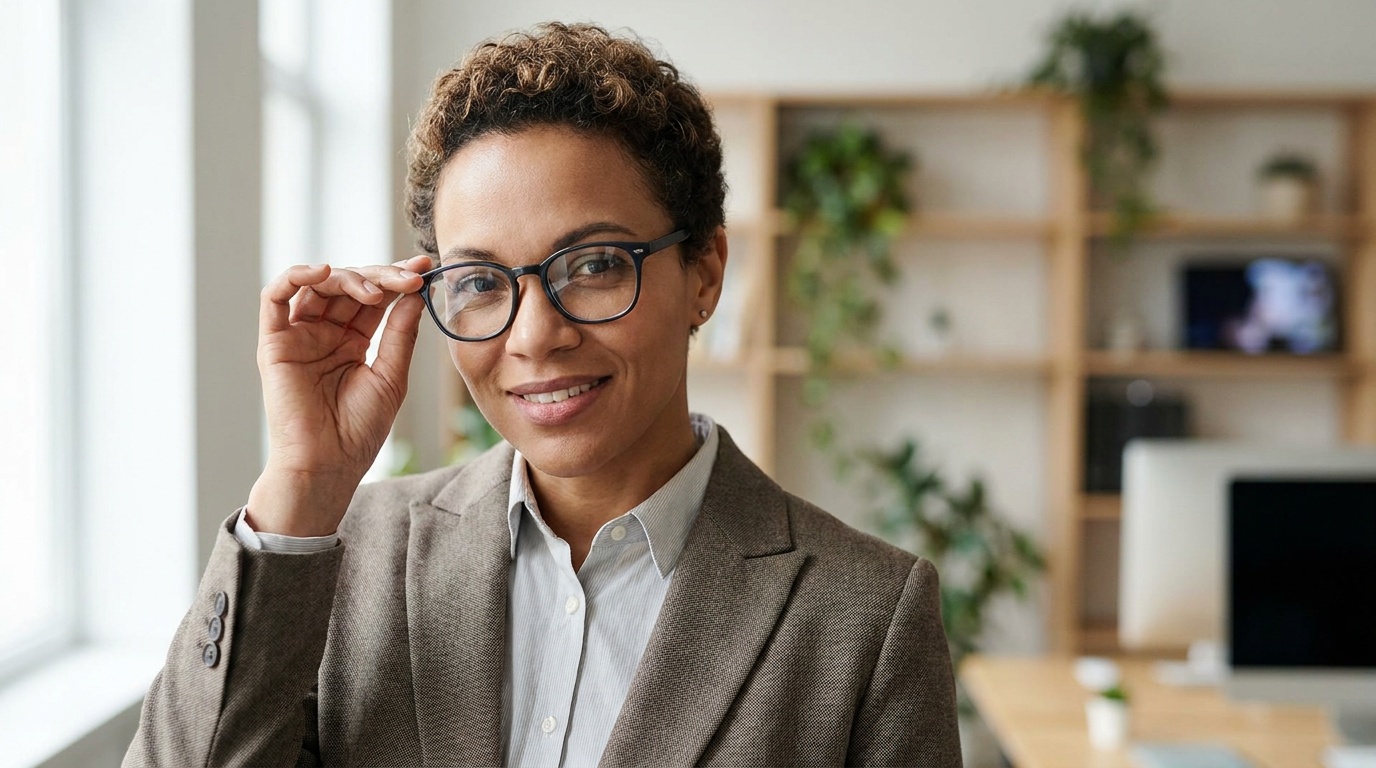
It's one of the most common questions I get from clients preparing for a session: should I wear glasses for my professional headshot? The short answer is yes, if you wear them every day. Your headshot needs to look like you on your best day, and if glasses are part of your daily identity, they belong in your photo.
But the real answer is more nuanced, especially when dealing with reflections, glare, and the new possibilities offered by AI headshots. As a portrait photographer, I’ve spent countless hours angling lights and adjusting poses to get that perfect, glare-free shot. Here’s my definitive guide to making the right choice and getting a fantastic result, whether you're in a studio or using a selfie to create an AI portrait.
The Golden Rule: Authenticity First
A professional headshot serves one primary purpose: to create a connection. It’s for the recruiter viewing your LinkedIn profile, the conference organizer creating your speaker badge, or the potential client visiting your company’s website. They need to recognize you and feel like they already know you a little.
If you wear glasses 90% of the time, taking them off for your headshot creates a disconnect. When you meet someone in person or on a video call, you want them to think, “Ah, there’s the person from the photo.” You don’t want their first thought to be, “You look different than your picture.” That slight hesitation can undermine the trust you’re trying to build.
Think of your glasses not as an accessory, but as part of your face. For many, they are integral to their personal brand and style. Taking them off can feel like you’re not presenting your true self.
Should You Wear Glasses for Your Professional Headshot? Key Considerations
Deciding to wear your glasses is the first step. The next is understanding how that choice impacts your photo and what you can do to ensure the result is polished and professional.
Your Profession and Audience
Consider the image you want to project. In some fields, like academia, law, or finance, glasses can reinforce an impression of intelligence, diligence, and authority. A well-chosen frame can add a layer of seriousness and sophistication.
In more creative fields, like design or marketing, unique and stylish frames can be a powerful expression of your personality and creative flair. They become a statement piece. If you're an architect known for your bold designs, a pair of distinctive frames can echo that professional identity.
The Style of Your Frames
Not all glasses are created equal. Your everyday reading glasses might not be the best choice for a headshot that will represent you for years.
- Frame Style: Choose frames that complement your face shape and professional attire. Classic, neutral frames (black, tortoiseshell, metal) are a safe and timeless bet. If you have bolder, more colorful frames, make sure they align with your personal brand.
- Lens Type: Avoid transition lenses at all costs for an outdoor shoot. Even on an overcast day, they can darken, obscuring your eyes and creating the impression that you’re wearing sunglasses. If you’re taking selfies for an AI generator, take them indoors to avoid this.
- Condition: This seems obvious, but check your glasses before any photo. Are the frames crooked? Are the nose pads discolored? Are there scratches on the lenses? Your headshot captures detail, and worn-out glasses will detract from an otherwise professional image.
A Photographer's Guide to Conquering Glare
Glare is the single biggest technical challenge when photographing someone with glasses. It occurs when a light source reflects directly off the lens and into the camera. As a photographer, my job is to control the light to eliminate these distracting white spots that hide your eyes.
Traditional Studio Techniques
In a professional studio, we use specific techniques to manage reflections. Understanding these can help you if you ever get a traditional headshot, and it also informs how you should light yourself for a selfie.
- Light Source Position: The key is to move the main light source higher and further to the side. If light hits the glasses from a high angle (around 45 degrees above and to the side), it will reflect downwards, away from the camera lens.
- Light Quality: We use large, soft light sources (like a softbox or an octabox). A large source wraps light around the face more gently, creating softer reflections that are less distracting than the harsh, sharp glare from a small light source like an on-camera flash or a ring light.
- Posing Adjustments: Small tweaks in your pose make a huge difference.
- Tilt your chin down: A slight downward tilt of your head changes the angle of the lenses relative to the light, often eliminating glare instantly.
- Turn your face slightly: Turning your face a few degrees away from the main light source can also shift the reflection out of the camera's view.
Common Lighting Mistakes to Avoid
- Ring Lights: While popular with influencers, ring lights are terrible for people with glasses. They create perfect, distracting circles of light right over your pupils.
- On-Camera Flash: This is the worst offender. It points a direct, harsh light straight at your glasses, guaranteeing a massive, unflattering glare.
- Bright Computer Screens: If taking a selfie at your desk, the reflection of your monitor will appear clearly in your lenses. Turn to face a window instead.
Upload a photo, pick a look and get your portrait in a minute. Your face stays yours.
Try itHow AI Headshots Change the Glasses Game
The rise of AI photo studios has introduced a powerful new way to get a professional portrait, and it has some unique advantages for glasses-wearers.
AI headshot generators work by analyzing a set of photos you upload to learn your facial features. The AI then rebuilds your face in new, studio-quality scenes. This process is surprisingly adept at handling glasses.
Because the AI is generating a new image rather than just retouching an existing one, it can often create a perfect, glare-free version of your glasses. It understands the concept of “glasses” and renders them cleanly in the new portrait. This means that even if your source selfies have minor reflections, the final AI-generated headshot can look like it was shot in a perfectly controlled studio environment.
This is where a service like Portretto becomes incredibly useful. You can upload a variety of selfies—some with your glasses on, some with them off, from different angles and in different lighting. The AI uses this data to create a wide range of headshots, giving you the option to choose the perfect shot with glasses, or even have a professional option without them, all from a single session.
Checklist: Preparing Selfies for an AI Headshot with Glasses
To get the best results from an AI headshot generator, you need to provide it with high-quality input. Garbage in, garbage out.
1. Clean Your Glasses
- Use a microfiber cloth and lens cleaner to remove all smudges, dust, and fingerprints. AI can interpret a smudge as a permanent feature or get confused by it.
2. Find the Right Light
- The best light is soft, natural light. Stand facing a large window on an overcast day or in a spot with indirect sunlight.
- This provides even illumination across your face and minimizes the risk of harsh reflections in your lenses.
- Avoid direct sun, which causes squinting and hard shadows.
3. Position Yourself Correctly
- Make sure your glasses are sitting straight on your face and pushed up properly. Droopy glasses can make you look tired.
- Use the classic photographer's trick: push your chin forward and slightly down. This defines your jawline and helps angle your lenses away from the light source.
4. What to Upload
- Variety is Key: Don't just upload 10 nearly identical photos. The AI needs data. Upload selfies from different angles (straight on, three-quarter view), with different facial expressions (smiling, neutral), and in different (but well-lit) locations.
- Include Photos With and Without Glasses: This is a pro tip. By providing the AI with images of your face both with and without glasses, you give it a complete picture of your facial structure. This allows the AI to generate flawless headshots in both styles, giving you ultimate flexibility.
- Focus on the Eyes: Ensure your source photos are sharp and your eyes are in focus. Even if they are behind lenses, your eyes are the most important part of a headshot.
Common Mistakes When Wearing Glasses in Headshots
Beyond glare, there are a few other pitfalls to watch out for.
- Mistake 1: Frames Hiding Your Eyes. Your eyes must be visible. If your frames are so thick or sit in a way that they cast a heavy shadow or completely obscure your eyebrows, they are not right for a headshot. Your expression comes from your eyes and brows.
- Mistake 2: Distorting Lenses. Very strong prescriptions can sometimes magnify or shrink the appearance of your eyes. While a good photographer can minimize this with lighting and angles, be aware of it. When taking your selfies, check to see if the distortion is extreme from certain angles.
- Mistake 3: Outdated Styles. Your headshot should be current (taken within the last 1–2 years). If your glasses are from a decade ago, it instantly dates your photo. Your headshot is an investment in your professional image; make sure your eyewear reflects that.
- Mistake 4: Using Empty Frames. Some people try to solve the glare problem by popping the lenses out of their frames. Don't do this. It looks unnatural, reflections are often missing where they should be, and it can create weird distortions around the eyes. It's a trick that rarely works.
The Verdict: Get the Best of Both Worlds
So, should you wear glasses for your professional headshot? Yes, if they are part of your daily professional identity. Authenticity is paramount.
However, you don't have to choose just one look. In a traditional photoshoot, I often encourage clients to do half the session with glasses and half without. This gives them options for different contexts. A formal corporate bio might use the glasses shot, while a more casual social media profile might use the one without.
This is where AI headshot tools truly excel. With a platform like Portretto, you don’t need to pay for extra studio time. By simply uploading a mix of selfies with and without your glasses, you can generate a diverse portfolio of professional portraits. You get both options, perfectly rendered, allowing you to choose the best image for every platform and occasion without any extra hassle or cost.
FAQ
Do glasses make you look unprofessional in a headshot?
Not at all. In fact, a stylish and appropriate pair of glasses can make you look more professional, intelligent, and authoritative. The key is to choose frames that suit your face, your industry, and are in good condition. Authenticity is most important, so if you wear glasses daily, you should wear them in your headshot.
How do I stop my glasses from glaring in a headshot selfie?
To prevent glare, use a large, soft light source like a window. Face the window directly so the light is even. Avoid direct sunlight, overhead lights, and ring lights. You can also try tilting your chin down slightly, which changes the angle of the lenses relative to the light and often eliminates reflections.
Should I wear my transition lenses for a professional headshot?
No, you should avoid wearing transition lenses for a headshot, especially if taking photos outdoors or near a bright window. They can darken unexpectedly, obscuring your eyes and making it look like you're wearing sunglasses. It's best to use regular, clear lenses for any professional photo.
Is it better to take a headshot with or without glasses?
The best approach is to have options for both. Wear glasses if they are part of your everyday look for authenticity. However, having a version without glasses is great for different professional contexts. AI headshot generators make it easy to create both versions from a single set of uploaded selfies.
Can AI really remove the glare from my glasses in a headshot?
Yes, AI headshot generators are very effective at this. Instead of editing your original photo, they create a brand new, photorealistic image based on your facial data. In this process, the AI can render your glasses perfectly without the glare that may have been present in your source selfies, resulting in a clean, studio-quality look.