German CV Photo Requirements: Your 2024 Expert Guide
Applying for a job in Germany involves navigating a set of cultural norms that can feel unique, especially when it comes to your application photo, or Bewerbungsfoto. While no longer legally required, a professional photo is a powerful, unspoken expectation that can significantly impact a recruiter's first impression. Understanding the specific cv photo requirements germany has is your first step toward crafting an application that stands out for all the right reasons.
The 'Bewerbungsfoto': More Than Just a Headshot
In many countries, adding a photo to a CV is discouraged to prevent bias. Germany is different. Since the General Equal Treatment Act (Allgemeines Gleichbehandlungsgesetz) was passed in 2006, companies cannot legally demand a photo. However, in practice, the vast majority of applications—especially in conservative fields like finance, law, and engineering—include one. Omitting it can be seen as unusual or as if you have something to hide.
Think of the German application photo not as a simple identifier, but as the handshake before the interview. It’s a strategic tool meant to convey professionalism, competence, and personality. A high-quality, appropriate photo signals that you are serious, detail-oriented, and understand the local business culture. It’s your first and best chance to present yourself as a polished professional before you even step into the room.
Unpacking the German CV Photo Requirements
Unlike a rigid passport photo, the Bewerbungsfoto has guidelines that allow for a bit more personality while still adhering to a professional standard. As a portrait photographer, I see these as a framework for creating a compelling image, not a set of restrictive rules.
Format and Size
The most common format for a German CV photo is portrait (vertical) orientation. While there's no single mandatory size, there are two widely accepted standards:
- Standard CV Photo: Approximately 4.5 x 6 cm (around 1.77 x 2.36 inches).
- **Cover Sheet Photo (Deckblatt):** A larger format, often around 6 x 9 cm (around 2.36 x 3.54 inches), is used if you include a separate cover sheet with your application.
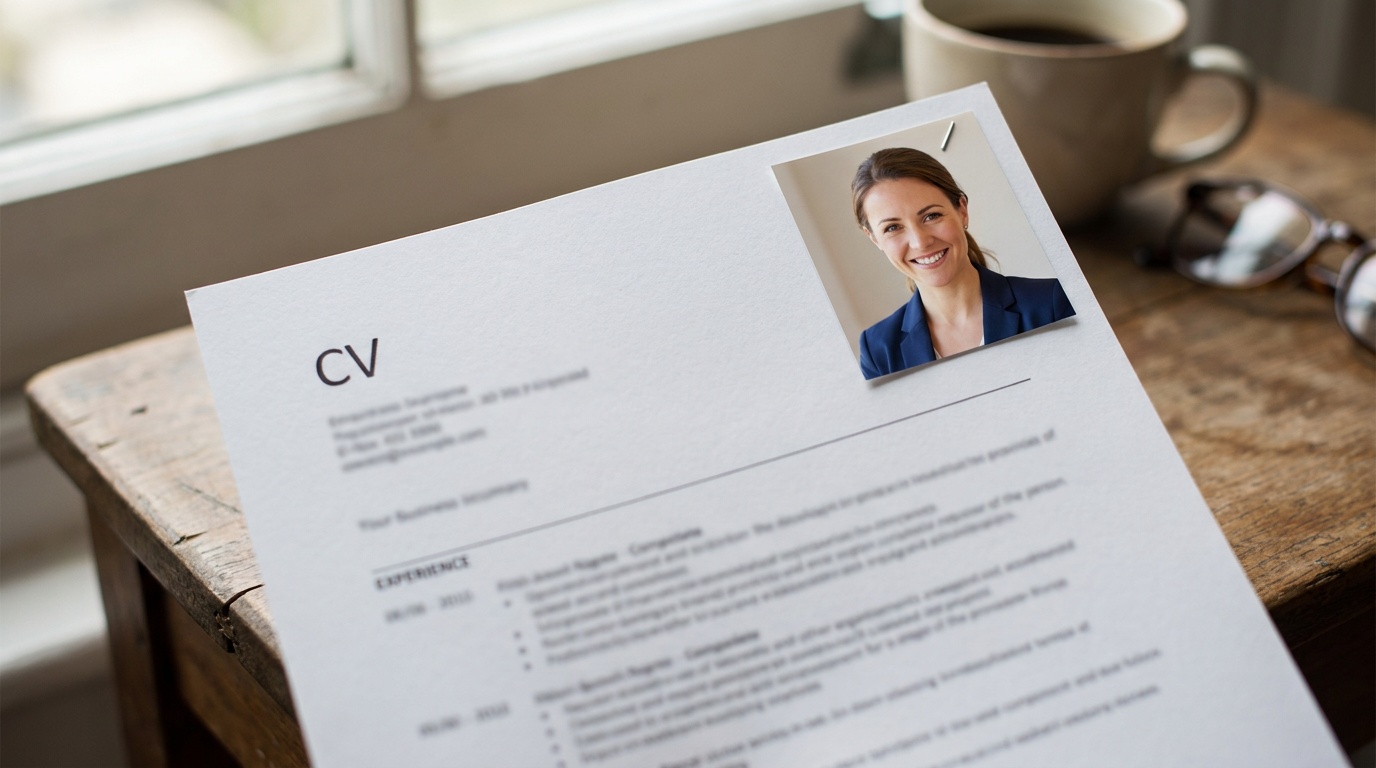
This photo is typically placed in the upper right-hand corner of your CV, aligned with your name and contact details. It should be seamlessly integrated, not look like an afterthought.
Composition and Framing
The standard is a head-and-shoulders shot. Your face should be the clear focal point. Here are the key compositional elements I focus on in a shoot:
- Framing: The shot should include your full head, your neck, and the top of your shoulders, often extending down to your upper chest. This allows your clothing to help frame the shot and add to the professional look.
- Head Position: Your eyes should ideally fall on the upper third line of the photograph. This is a classic portrait composition rule that creates a balanced and engaging image.
- Gaze: Look directly into the camera lens. This creates a connection with the viewer (the recruiter) and conveys confidence and directness.
Background Choice
The background should be completely non-distracting. The focus must be 100% on you. The best choices are neutral and professional.
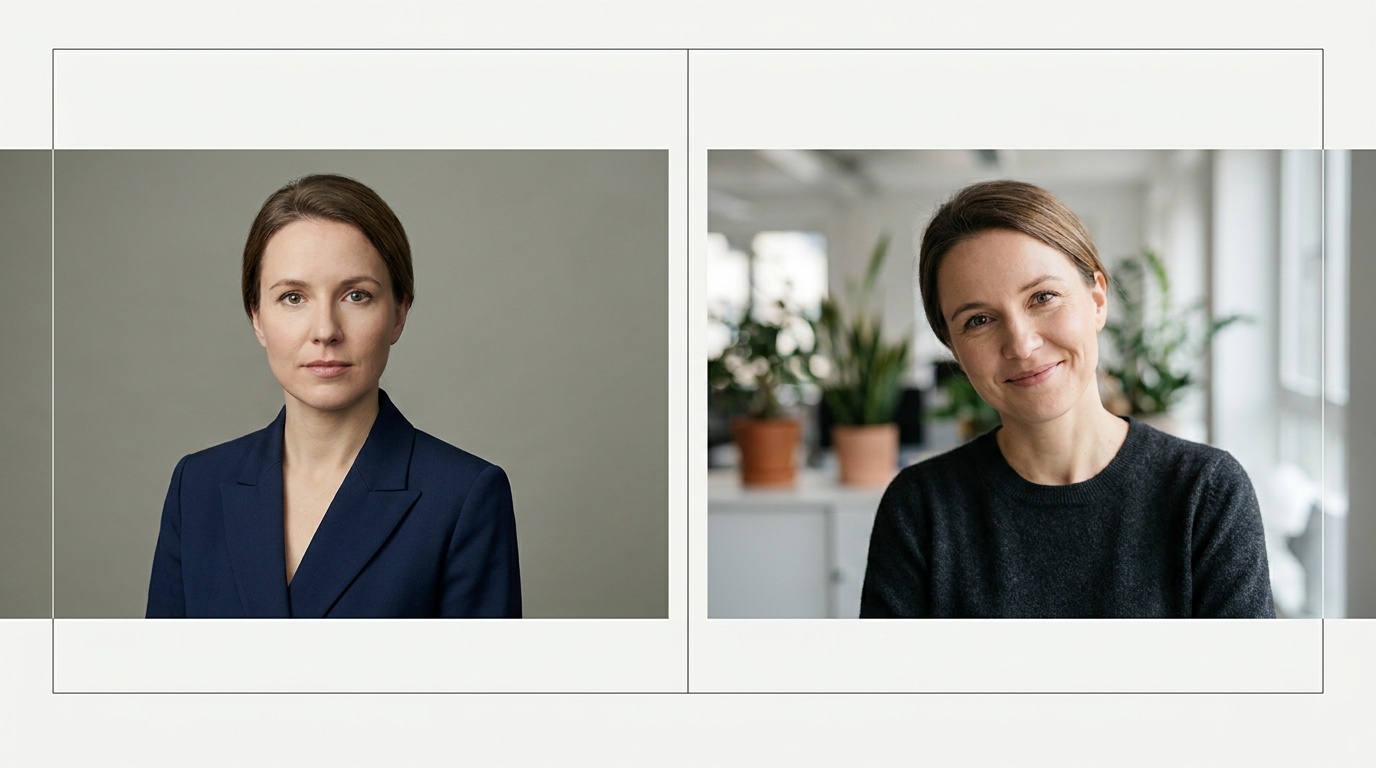
- Studio Standard: A solid, light-colored background is the gold standard. Light grey is my personal favorite as it works well with most skin tones and clothing colors without being as stark as pure white.
- Subtle Office Blur: For some industries, a very subtly blurred office background can work, but it's a risk. If not done perfectly, it can look busy and unprofessional. My advice is to stick with a solid neutral background to be safe.
- What to Avoid: Absolutely no outdoor scenes, brick walls, vacation snapshots, or cluttered home backgrounds. These immediately signal a lack of professionalism.
The Photographer's Checklist: Nailing Your 'Bewerbungsfoto' at Home
While a professional photographer is one option, you can create a fantastic source image at home if you pay close attention to the details. The goal is to create a high-quality photo that you can then perfect.
Step 1: Choosing Your Wardrobe
Your clothing is a critical part of the message. The rule is simple: dress for the job you want, leaning towards the conservative side.
- Corporate/Formal Industries (Banking, Law, Consulting): A dark blazer over a light-colored blouse or collared shirt is non-negotiable. For men, a tie is often expected. Stick to solid colors like navy, charcoal, or black.
- Business Casual/Tech Industries (Marketing, IT, Startups): You have more flexibility. A smart blouse, a quality knit sweater, or a crisp button-down shirt without a tie can work well. Even here, avoid t-shirts, hoodies, or anything with large logos or busy patterns.
- General Tips: Make sure your clothes are clean, ironed, and fit well. Avoid anything too bright, flashy, or low-cut. The goal is to look polished and have the focus remain on your face.
Step 2: Setting Up the Shot (Lighting is Everything)
This is the single most important technical element. Bad lighting will ruin even the best-posed photo. You don't need fancy equipment; you just need a window.
- Find Your Light: The best light for a portrait is soft, indirect natural light. Position yourself facing a large window on an overcast day. This creates a beautiful, flattering light with soft shadows.
- Positioning: Stand or sit about three feet away from the window. Have someone else take the photo, or use a tripod with a self-timer. This avoids the distortion and awkward angles of a typical selfie.
- Common Lighting Mistakes to Avoid:
- Direct Sunlight: Creates harsh, squinty eyes and deep, unflattering shadows.
- Overhead Indoor Lighting: Creates dark circles under your eyes and nose, often called 'raccoon eyes'.
- Backlighting (Window Behind You): This will turn you into a dark silhouette.
- On-Camera Flash: This produces a flat, harsh light that eliminates depth and can create red-eye.
Step 3: Posing and Expression
Your expression and posture communicate your personality. You want to appear confident, approachable, and competent.
- Posture: Sit or stand up straight, pull your shoulders back and down, and elongate your neck. This simple adjustment instantly reads as more confident.
- Angle: Avoid a straight-on, mugshot-style pose. Angle your body about 45 degrees away from the camera, then turn your head back to face the lens. This creates a more dynamic and flattering line.
- Expression: The goal is a gentle, genuine smile. A closed-mouth smile or a very slight smile showing a bit of teeth works best. Think of a pleasant memory or an upcoming success to make it look natural. It should reach your eyes. Practice in the mirror to find an expression that feels both authentic and professional.
Upload a photo, pick a look and get your portrait in a minute. Your face stays yours.
Try itFrom Selfie to Professional Headshot: The AI Advantage
Even with the perfect at-home setup, achieving a flawless studio background and professional-grade lighting can be nearly impossible. This is where technology can bridge the gap between a good DIY photo and a perfect Bewerbungsfoto.
Taking your best shot—the one where you've nailed the lighting, wardrobe, and expression—and using an AI photo studio is a modern, cost-effective solution. For instance, a service like Portretto allows you to upload a high-quality selfie taken with the tips above. The AI can then generate a series of professional portraits, placing you against a perfect light grey studio background, refining the lighting to mimic a professional softbox setup, and ensuring the final image is high-resolution and meets all the technical cv photo requirements germany expects. It gives you the control of a DIY shoot with the polish of a professional studio.
Common Mistakes That Will Weaken Your Application
Recruiters see thousands of photos, and they can spot a lazy or inappropriate one instantly. Here are the most common errors I see that you must avoid:
- The Cropped Holiday Photo: Obvious, unprofessional, and tells the recruiter you didn't put in the effort. The lighting, clothing, and background are never right.
- The Passport Photo: While formal, a passport photo is too stiff, has the wrong expression (neutral, not friendly), and often uses harsh, flat lighting.
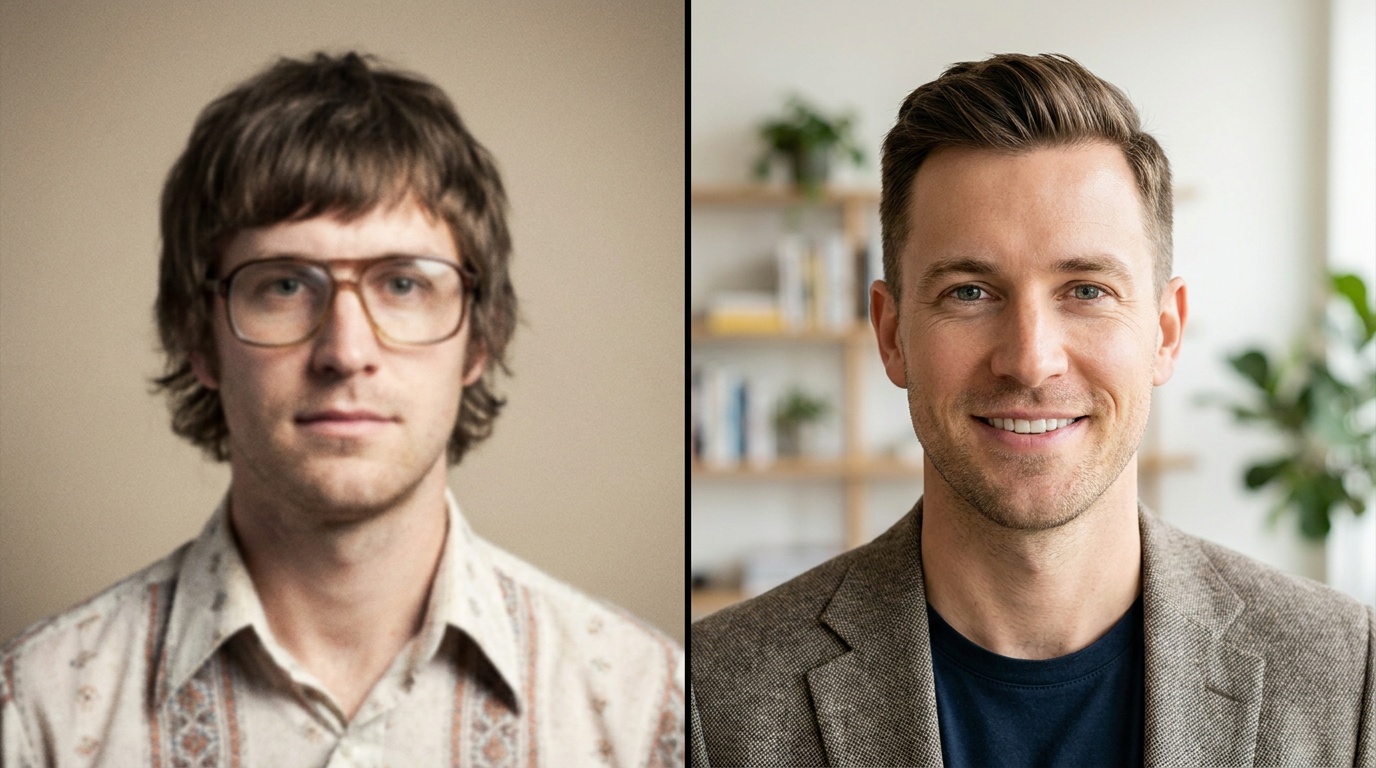
- An Outdated Photo: Your photo should be a recent likeness, ideally from the last 12 months. Using a photo that is five or ten years old is misleading.
- Heavy-Handed Editing: While minor blemish removal or color correction is fine, avoid excessive skin smoothing, changing your facial features, or using obvious filters. It needs to look like you on your best day, not an avatar.
- Wrong Orientation or Framing: A landscape photo or a full-body shot shows you don't understand the conventions of a Bewerbungsfoto.
Putting It All Together: A Final Checklist
Before you attach that photo to your Lebenslauf (CV), run through this final checklist to ensure it hits every mark of a professional German application photo.
- [ ] Attire: Professional, clean, and appropriate for your target industry.
- [ ] Background: Perfectly neutral (light grey, off-white).
- [ ] Lighting: Soft, frontal light with no harsh shadows.
- [ ] Pose: Body slightly angled, head facing the camera, confident posture.
- [ ] Expression: Friendly, confident, and approachable with a slight, genuine smile.
- [ ] Format: Portrait orientation, sized correctly (e.g., 4.5 x 6 cm).
- [ ] Quality: High-resolution, sharp, and clear. No pixelation.
- [ ] Authenticity: It looks professional, but it still looks like you.
Getting your Bewerbungsfoto right is a small but crucial investment in your job search in Germany. It demonstrates cultural awareness and a commitment to professionalism that recruiters will notice and appreciate. By following these guidelines, you can ensure your photo opens doors rather than closing them.
FAQ
Is a photo on a German CV mandatory?
No, a photo is not legally mandatory on a German CV due to the General Equal Treatment Act of 2006. However, it is a strong cultural expectation, and most recruiters still expect to see one. Omitting it can make your application stand out in a negative way.
What is the standard size for a CV photo in Germany?
The most common size for a photo placed directly on the CV (*Lebenslauf*) is approximately 4.5 x 6 cm. If you use a separate cover sheet (*Deckblatt*), a larger format of around 6 x 9 cm is often used.
Should my German CV photo be in color or black and white?
Color is the standard and safest choice for a German CV photo across most industries. Black and white can be perceived as more artistic and may be suitable for creative fields like design or photography, but for corporate or traditional roles, a color photo is always recommended.
Can I smile in my German CV photo?
Yes, you absolutely should! A friendly and confident smile is highly encouraged. Avoid a wide, toothy grin or a stern, serious expression. A slight, genuine smile that makes you look approachable and competent is ideal.
Can I take my own 'Bewerbungsfoto' for a German job application?
Yes, you can take your own photo, but you must ensure it meets professional standards. This means using excellent, soft lighting (like from a window), a neutral background, professional attire, and a high-resolution camera. Using an AI photo service can then help elevate your well-taken selfie to studio quality.